Why a beginner needs fully weighted keys
If you take one thing from this guide, make it this: a beginner needs 88 fully weighted keys, not a light keyboard. A weighted hammer action recreates the resistance of an acoustic piano, so the keys push back when you press them. That resistance is exactly what builds the finger strength, independence and dynamic control a pianist needs, and it lets you move to an acoustic piano later without relearning your touch. A semi-weighted or synth-action keyboard is cheaper and lighter, but it teaches a different feel, and almost every beginner who starts on one ends up replacing it. Buying weighted from the start saves money in the long run and gives you the right foundation from day one. We explain the full difference in our guide to weighted versus semi-weighted keys.
How much should a beginner spend?
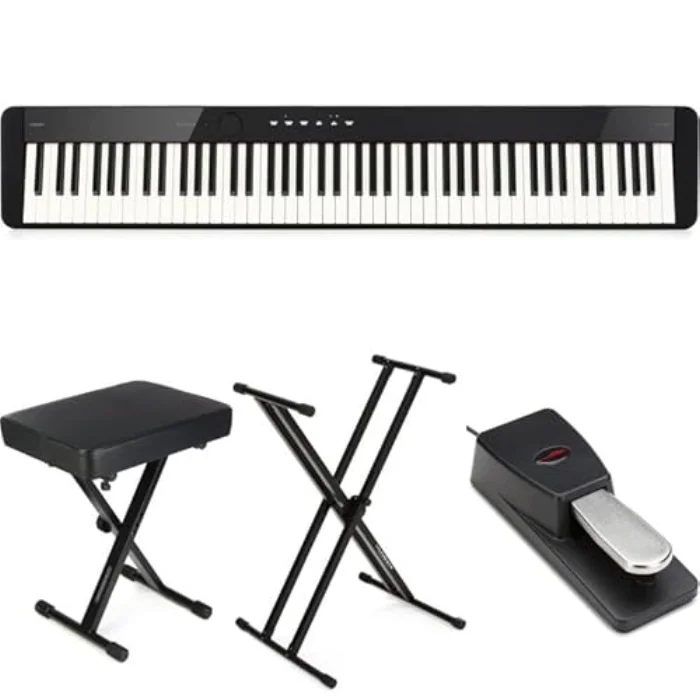
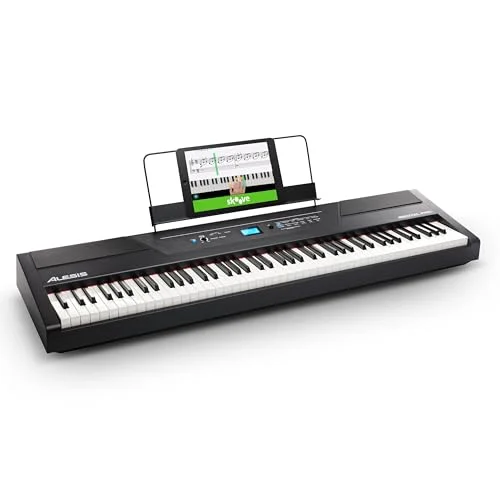
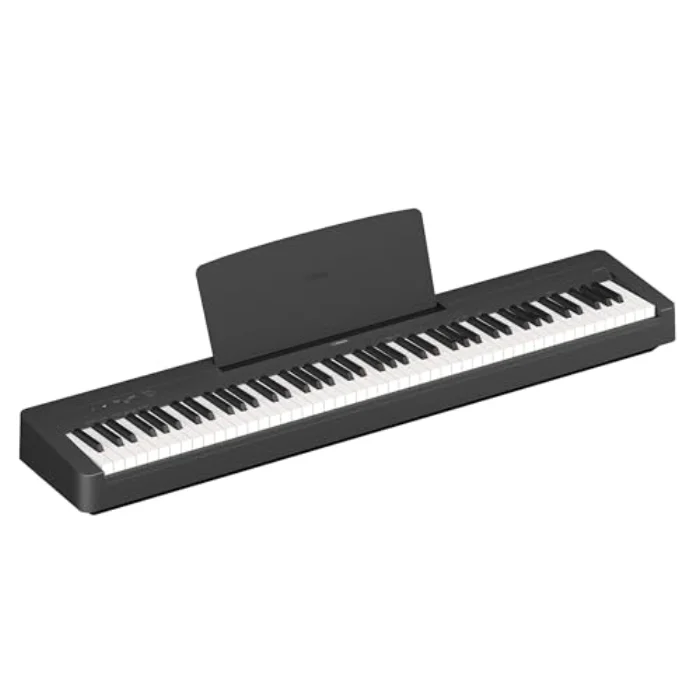
The sensible range for a first piano is roughly £280 to £450. Spending less than £280 almost always means giving up fully weighted keys, which is the one corner you should not cut. At the bottom of the sensible band, the Alesis Recital Pro at £279 gives you a real 88-note hammer action and a lesson mode, the cheapest honest way to begin. The sweet spot is the Yamaha P-145 at £419, which adds a better graded action and the trusted CFX grand voice. Spending more than £450 is rarely necessary at the very start, though pianos like the £599 Casio PX-S1100 are worth it if you want an instrument you will not outgrow within a couple of years. Remember to budget another £40 to £120 for a stand and bench, as good posture starts on a stable set-up.
What a beginner actually needs, and what they don't
A beginner needs surprisingly little beyond the right keys. The essentials are 88 fully weighted keys, a decent grand voice, a sustain pedal (usually included), a headphone socket for quiet practice and simple controls that do not get in the way. A connection to a learning app such as Yamaha's Smart Pianist or Roland's Piano App is a real bonus, because it turns a tablet into a patient teacher with guided lessons and on-screen scores. Beyond that, most of the spec sheet is noise for a beginner: you do not need 56 voices, hundreds of rhythms, or the very highest polyphony to learn your first pieces. A simple, well-made piano with a great action and a great grand voice will serve you far better than a feature-stuffed one with a mediocre action.
Common beginner mistakes to avoid
Three mistakes come up again and again. The first is buying an unweighted keyboard to save money, then having to replace it within a year, which costs more overall. The second is being seduced by a long voice list: a piano with 200 sounds and a poor action is worse for learning than one with 10 sounds and a great action. The third is skimping on the stand and pedal: practising on a wobbly table with a foot-tapping keyboard pedal teaches bad posture and habits that are hard to unlearn. Spend your money where it counts, on the action and a stable set-up, and treat everything else as a bonus. Our full buying guide covers each step in more detail.
Our advice for beginners
For most first-time learners, the Yamaha P-145 at £419 is the best starting point: a trustworthy graded action, the superb CFX grand voice and controls so simple you cannot get lost. If your budget is firmly under £300, the Alesis Recital Pro at £279 gets you onto real weighted keys, and if you want a piano you will keep for years, the Casio PX-S1100 at £599 is worth the stretch. Whichever you choose, insist on 88 fully weighted keys, add a stable stand and pedal, and connect a learning app to keep you motivated. See how we score these pianos on our how we test page, or compare instrument types in our digital piano vs keyboard guide.