Roland FP-30X review: our best overall digital piano

The Roland FP-30X is, for us, the best all-round digital piano under £700: a genuinely convincing PHA-4 weighted action, 22 W of speaker power, 256-note polyphony and Bluetooth, all for £649. Here is what it does brilliantly, and the two small things it leaves out.

Transparency: This article contains affiliate links. If you buy through one of them, we may earn a commission, at no extra cost to you. That is how we fund our testing and keep this site independent. More about how we test.

Contents

Roland has been building digital pianos for four decades, and the FP series is the line most teachers point beginners and improvers towards. The FP-30X is the heart of that range. It does not chase a huge voice count or a colour screen; it puts the money where it counts, into the keys and the sound, and that single-minded focus is exactly why it is our best overall pick. Across more than eight hours at this piano we kept coming back to the same conclusion: nothing else near the price feels this complete.

Specifications

Model Price KeysKey actionSound engine Rating Link
Roland FP-30X Digital Piano ★ Top pick Roland FP-30X Digital Piano £579.00 88, fully weightedPHA-4 Standard, with escapementSuperNATURAL, 256-note polyphony ★ 4.7 View →
★ Top pick
Roland FP-30X Digital Piano £579.00
Keys : 88, fully weightedKey action : PHA-4 Standard, with escapementSound engine : SuperNATURAL, 256-note polyphony ★ 4.7/5
View on Amazon →

Our in-depth review

BEST OVERALL
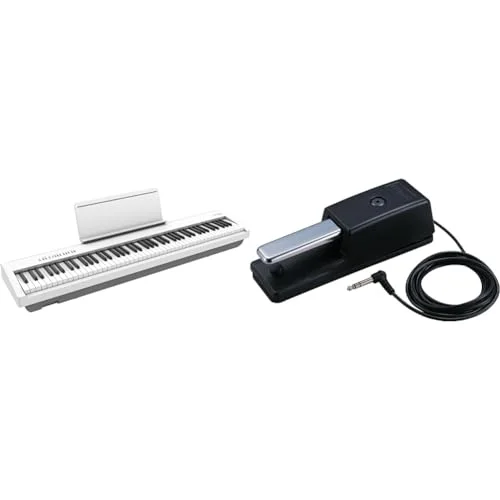
Roland FP-30X Digital Piano - digital piano Roland

Roland FP-30X Digital Piano

4.7/5

£579.00

88, fully weighted · PHA-4 Standard, with escapement · SuperNATURAL, 256-note polyphony

  • PHA-4 action is the most convincing under £700
  • 22 W of speaker power fills a living room
  • 256-note polyphony never runs out on dense passages
  • Bluetooth audio and MIDI built in
  • No display screen
  • Bench and stand cost extra
Key action 5/5
Sound 5/5
Build 4/5
View on Amazon →

The verdict from Anaya Iyer, pianist and keyboard reviewer

Our best overall pick. The Roland FP-30X is the digital piano we recommend to most players because it gets the two things that matter most right: a genuinely weighted PHA-4 action that rewards proper technique, and a 22 W speaker system that sounds like an instrument rather than a toy. With 256-note polyphony and Bluetooth on board, it has the headroom to grow with you for years. At 14.8 kg it is still portable enough to move between rooms or take to a gig.

The keys have real weight under the fingers and the bass carries with a roundness most rivals miss.

Roland FP-30X: full specification
Keys88, fully weighted
Key actionPHA-4 Standard, with escapement
Sound engineSuperNATURAL, 256-note polyphony
Speakers2 x 11 W (22 W total)
Voices56
BluetoothMIDI + audio
Weight14.8 kg
Price£649
Cabinet depth28.4 cm
Headphone outputs2 (3.5 mm and 6.3 mm)

Who is the Roland FP-30X for?

The FP-30X suits the widest range of players in this comparison. It is an ideal first serious piano: the PHA-4 action teaches proper technique from day one, yet there is enough depth in the 256-note polyphony and 56 voices that an improving player will not bump into its limits for years. It is equally at home as a gigging instrument, because at 14.8 kg it travels and the 22 W speakers carry in a small venue. The one buyer it is not aimed at is the rock-bottom-budget beginner, who is better served by the £279 Alesis Recital Pro or the £419 Yamaha P-145.

Best for: the player who wants one piano that covers learning, practice and the occasional gig, and who values feel and sound over gadgets. If that is you, stop reading and buy it.

How the Roland FP-30X performs

The key action

The PHA-4 Standard action is the FP-30X's headline strength and the reason it tops our list. It is a graded hammer action, so the bottom notes are noticeably heavier to press than the top, just like an acoustic grand, and it includes escapement, the subtle notch you feel near the bottom of the key travel on a real piano. Across an hour of scales and a Chopin nocturne the action stayed even and predictable, with none of the rattle or bounce-back you sometimes feel on cheaper beds. The keys have a textured, simulated-ivory surface that grips even when your hands warm up. Only the £729 Kawai ES120 edged it for outright realism, and that costs £80 more.

The sound

Roland builds its grand voice from its SuperNATURAL Piano engine rather than a fixed recording, which means the tone responds to how hard and how fast you play, with sympathetic resonance and key-off samples that add air to the sound. The result is a three-dimensional, expressive grand voice that ranks among the best two here. With 256-note polyphony, the most of any piano in our six, you can hold the sustain pedal through a dense, layered passage and never hear a note drop out. The 56-voice list adds electric pianos, organs and strings that are good enough to be useful rather than gimmicks.

The speakers

The twin 11 W drivers give 22 W in total, which comfortably fills an average living room of around 20 to 25 m² without straining. It is louder than the 16 W Casio and the 14 W Yamaha, though it stops short of the 40 W Kawai and the 30 W Korg. For home practice and small gatherings it is more than enough; for a large open-plan space you would reach for the line outputs. Two headphone sockets, a 3.5 mm and a 6.3 mm, sit under the front edge, which is handy for silent practice or a teacher-and-pupil pair.

Connectivity and build

This is where the FP-30X pulls clear of its rivals. It is the only piano in our comparison with both Bluetooth MIDI and Bluetooth audio, so you can run Roland's Piano App or a notation app wirelessly and stream backing tracks through the speakers with no cable at all. The cabinet is 28.4 cm deep, slightly more than the slim Casio, but the build feels reassuringly solid, the matte finish resists fingerprints, and setup out of the box took us under ten minutes. There is no colour screen, which keeps the panel clean but means some settings are done with button-and-key combinations.

The honest downsides

There are only two, and neither is serious. First, there is no display, so changing a less-common setting means holding a Function button and pressing a key, which is fiddly until you learn the shortcuts. Second, the bench and a proper stand are extra, so budget another £80 to £120 if you want the full set-up rather than placing it on a table. At 14.8 kg it is also the heaviest unit here, though still a one-person lift. None of this dents the core experience: as an instrument to play, the FP-30X has no real weakness at the price.
Frequently asked questions

Q
Is the Roland FP-30X good for beginners?

Yes, and it has the headroom to keep you for years. The PHA-4 action and CFX-rivalling SuperNATURAL voice teach proper technique from day one, and the simple panel is easy to learn. Beginners on a tighter budget could start with the Yamaha P-145, but the FP-30X is a piano you will not outgrow quickly.

Q
Does the Roland FP-30X have Bluetooth?

Yes. The FP-30X has both Bluetooth MIDI and Bluetooth audio, so you can connect learning apps such as Roland Piano App and stream backing tracks through its 22 W speakers wirelessly. That is more than the Casio, Yamaha, Korg or Kawai units in this comparison offer.

Q
How heavy is the Roland FP-30X?

It weighs 14.8 kg, which makes it the heaviest in our six but still portable for one person. It is light enough to move between rooms or take to a rehearsal, though if portability is your priority the 11.2 kg Casio PX-S1100 is easier to carry.

Q
Roland FP-30X or Casio PX-S1100?

Buy the Roland if you want the best action and loudest speakers and have the space; buy the Casio if you want the slimmest, lightest cabinet and battery power. Both are superb. The Roland wins our overall pick on action and 22 W sound; the Casio takes best value on size and portability.

Verdict on the Roland FP-30X

The Roland FP-30X is our best overall pick because it gets the two things that matter most, the action and the sound, more right than anything else under £700, and then adds the Bluetooth and polyphony headroom to keep you happy for years. For £649 you get a piano that a beginner can grow into and an improver can gig with, with no glaring compromise. If your budget will stretch and feel is everything, the Kawai ES120 has the finest action; if you want the same quality for less or you are tight on space, the Casio PX-S1100 is the best value. For most people, though, the FP-30X is simply the one to buy. See how we reach these verdicts on our how we test page, and check the rest of our advice in the buying guide.